Family Patterns

By Sonali Mittra · 20 November 2026
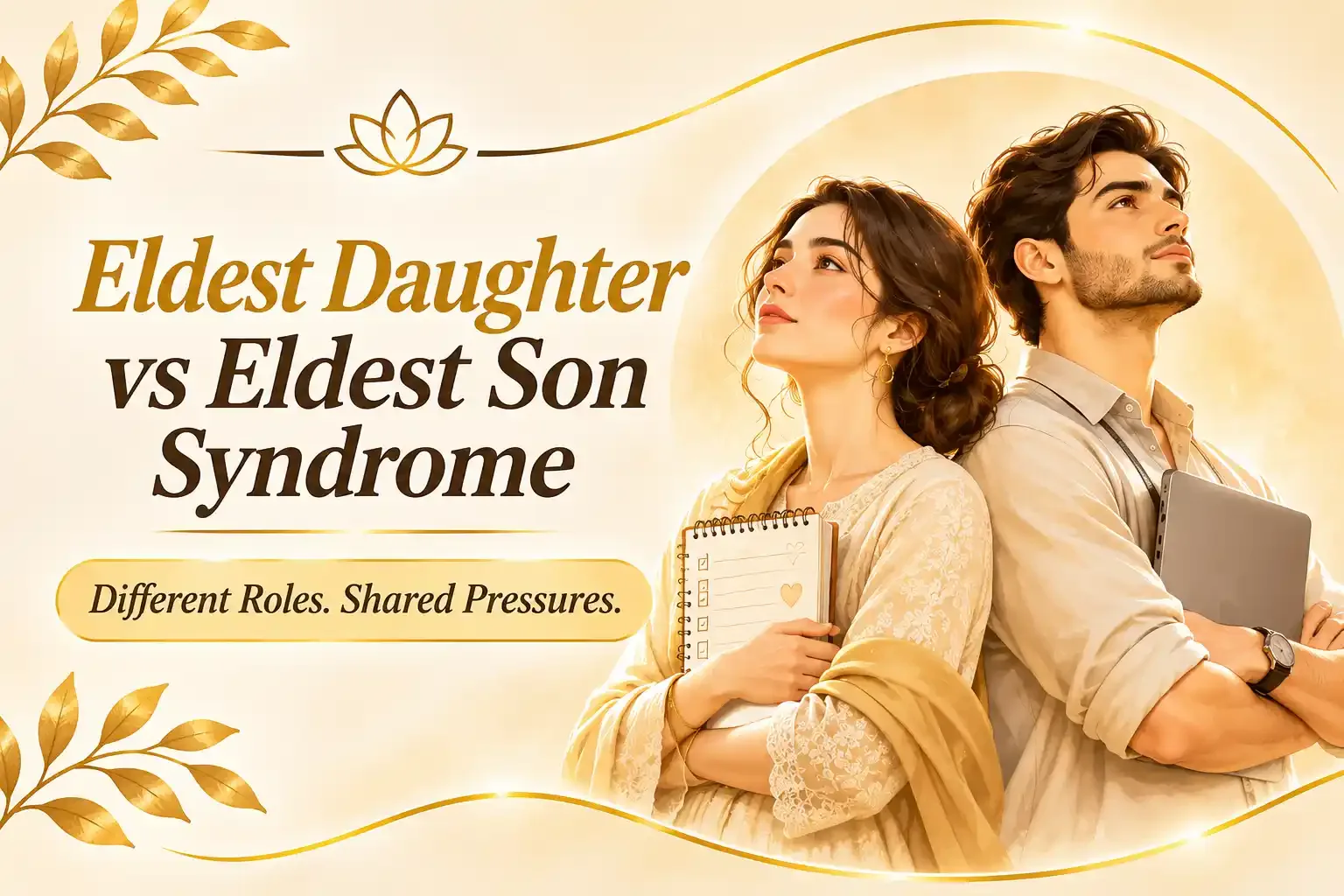
Birth order shapes all firstborns. But it does not shape them identically.
The eldest son and eldest daughter in the same family may share the position of firstborn, and share some of the associated characteristics: the achievement orientation, the responsibility, the sense of being under greater parental scrutiny. But the specific content of what is expected of them, and the emotional cost of meeting those expectations, tends to differ along gender lines.
This article examines those differences, drawing on birth order research, family systems theory and gender studies, to understand not just what eldest daughter syndrome and eldest son syndrome are, but how and why they diverge. If you want the full picture of the daughter’s pattern, read eldest daughter syndrome: the complete guide, and for the step-by-step path forward, how to heal eldest daughter syndrome.
Before examining the differences, the common ground.
Alfred Adler, who first formalised birth order theory in the early twentieth century, described a set of characteristics common to firstborns regardless of gender: a tendency toward achievement and leadership, a greater orientation toward adults and authority, a stronger sense of responsibility, and a particular sensitivity to “dethroning”, the experience of losing exclusive parental attention when a subsequent sibling arrives.
Frank Sulloway’s research, documented in Born to Rebel (1996), argued that firstborns are over-represented among conventional achievers and leaders. His conclusions have been debated, but they capture a widely recognised intuition about firstborns.
Both eldest daughters and eldest sons tend to absorb greater parental anxiety (first-time parents often apply more pressure and attention to their firstborn), take on responsibility for younger siblings, and develop a strong identification with adult values and expectations.
The divergence begins with what those adult values and expectations actually contain, which is, in many families and cultures, shaped by gender.
Eldest son syndrome describes the particular set of expectations and pressures placed on firstborn sons. In many cultural contexts, these centre on:
Lineage and legacy: The eldest son traditionally carries the family name, the family business and the family’s external representation in the world. The pressure is often about achievement, status and the continuation of what the father has built or represents.
Emotional stoicism: The eldest son is often expected to model emotional control: to not show weakness, vulnerability or excessive emotional need. This expectation is absorbed early and thoroughly.
Financial provision: In many family cultures, the eldest son carries an implicit or explicit expectation of financial responsibility for the family, including, in many Indian families, supporting parents in old age.
Achievement as identity: The eldest son’s worth in the family system is often significantly tied to his external accomplishments. He is measured by what he does, what he earns and what he achieves.
The psychological cost of eldest son syndrome tends to concentrate in emotional suppression, performance anxiety, difficulty with vulnerability, and a sense of identity that is fragile in the absence of achievement. Related reading: therapy for men who won’t ask for it, why men don’t cry and the hidden cost of success.
Eldest daughter syndrome: the internal burden
Eldest daughter syndrome carries a different but equally significant set of expectations, and its costs tend to concentrate in different domains.
The psychological cost of eldest daughter syndrome tends to concentrate in difficulty with self-expression and self-advocacy, guilt as a chronic emotional state, the inability to receive, and perfectionism rooted in anxiety rather than ambition. Related reading: the good girl syndrome, feeling responsible for everyone and the saviour complex.
Chronic stress and sustained caregiving can affect the health of anyone, regardless of gender. Research specific to eldest daughters is limited, but if you carry this role and notice persistent exhaustion, tension or other symptoms, please do get them checked by a doctor.
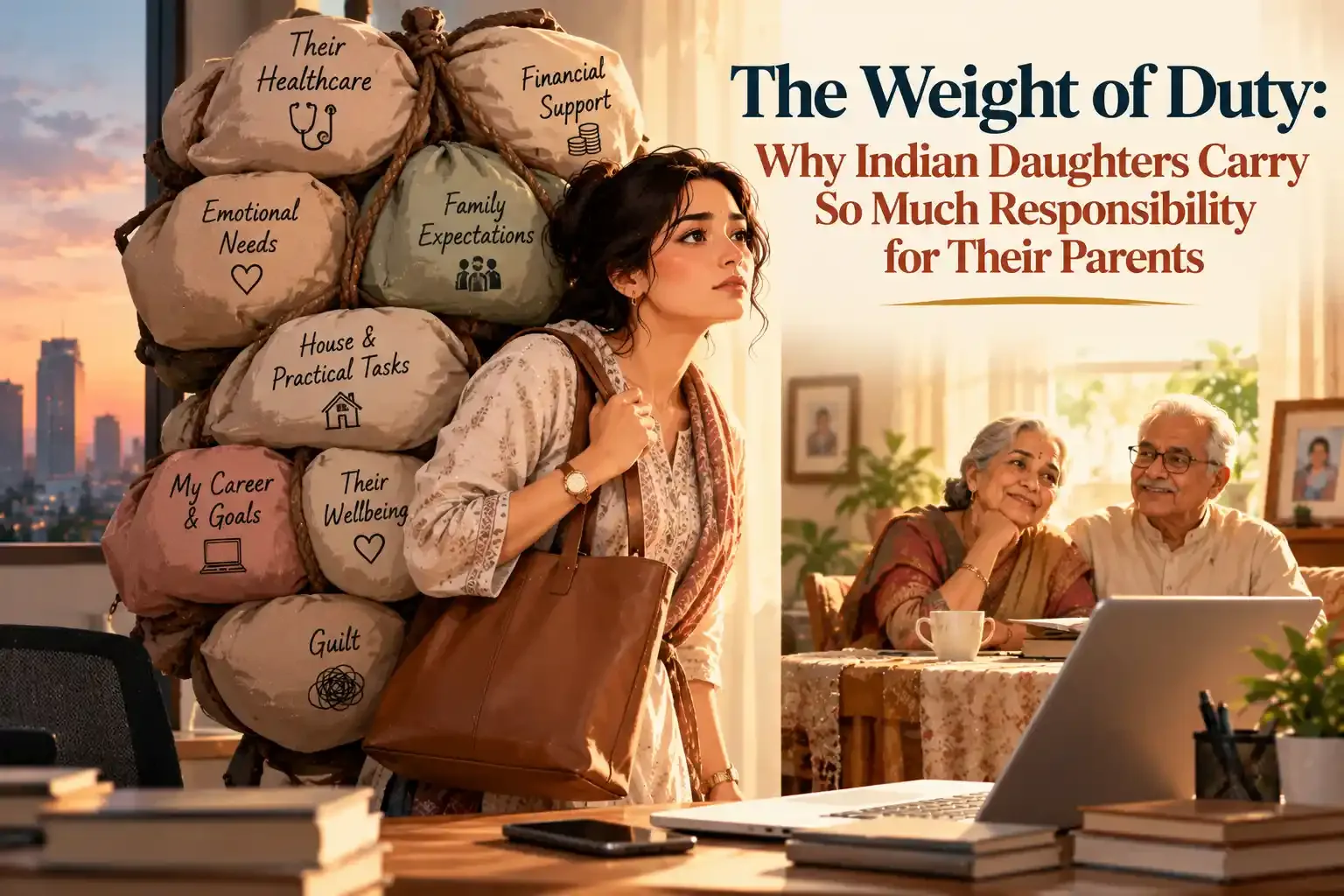
In many Indian families, these patterns are sharpened by cultural ideas of duty. The eldest son may be seen as heir and provider, expected to support parents in old age. The eldest daughter may be seen as the responsible, caring one, expected to look after siblings and parents, to keep the peace, and often to do this while working. You can read more in why Indian daughters carry so much responsibility for their parents, sibling conflict in elderly parent care and the sandwich generation.
These norms are changing. Many daughters are now earning and supporting their parents, and many sons are taking on emotional and caregiving roles. This is why the patterns below are tendencies, not rules.
Real families are more complicated than any label. Some examples:
The question is not “Which label am I?” but “What was I expected to carry, and what did it cost me?” This is closely linked to what psychologists call parentification, when a child takes on adult emotional or practical roles before they are ready.
Despite their differences, healing both patterns requires similar foundational elements: recognition of the pattern without shame, understanding of its origin in the family system, separation of the role from the self, work with the younger part that formed the adaptations, and practical development of the capacities that the role suppressed.
Family Constellation work is one approach that addresses the systemic and intergenerational dimensions of both patterns, which individual psychological work alone may not fully reach. Research on Family Constellation is limited, so it is best seen as a complement to professional care. Inner Child work can help with the younger part that learned the role. For a daughter’s step-by-step path, see how to heal eldest daughter syndrome.
Eldest daughter syndrome and eldest son syndrome start in the same place, the firstborn position, but they carry different weights. The son’s is often the weight of the world’s expectations: achieve, provide, never show weakness. The daughter’s is often the weight of the family’s emotions: care, soothe, keep the peace, and never need anything yourself.
Neither is a competition, and neither is a life sentence. Both patterns were learned, and what was learned can be understood, loosened and chosen differently. The first step is the same for everyone: to see what you were asked to carry, without shame, and to decide what is truly yours.
If you would like support exploring these patterns, book a session at The Healing Room and meet our healers before you decide. You can also learn about Family Constellation Therapy with Sonali Mittra.
Eldest son syndrome describes the pressures often placed on firstborn sons: carrying the family name and legacy, being emotionally stoic, providing financially, and having their worth tied to achievement. It is not a clinical diagnosis.
Eldest daughter syndrome describes a pattern in which the firstborn daughter takes on excessive emotional and practical responsibility in the family, such as caregiving, keeping the peace and managing others’ emotions, often at the expense of her own needs. It is not a clinical diagnosis.
Eldest son pressure is typically external and achievement-based: provide, succeed and stay stoic. Eldest daughter pressure is typically internal and relational: care, soothe, mediate and put others first. These are tendencies and not rules.
It is not a contest. Both carry real costs. The son’s burden is often visible and rewarded but leaves little room for vulnerability. The daughter’s burden is often invisible and unpaid, and can leave little room for her own needs.
They are not clinical diagnoses, but they describe real patterns of expectation and over-responsibility that many families recognise, and they are closely linked to parentification. Birth order research itself is debated, so family roles and cultural expectations matter as much as birth order.
Yes, and they can be strong, because ideas of duty, honour and caring for parents are deeply held. Eldest sons are often expected to provide, and eldest daughters to care. These norms are changing, and many families now share roles differently.
Yes. After illness, divorce or the loss of a parent, an eldest son can become the emotional caretaker of the family. Roles are shaped by circumstances, and not only by gender.
Yes. A person may carry the provider’s burden and the caregiver’s burden at once, for example an eldest daughter who is the family’s main earner and also its main carer. What matters is what you were expected to carry and what it cost you.
By recognising the pattern without shame, understanding where it came from, separating the role from the self, working with the younger part that learned it, and building the capacities the role suppressed: vulnerability and rest for sons, and self-advocacy, receiving and saying no for daughters. Therapy or counselling can help.
Family Constellation looks at your position in the family system and the expectations passed down through generations. It can help make hidden roles and loyalties visible. Research on the method is limited, so it is best used alongside professional care.
It is contested. Classic work by Adler and Sulloway suggests firstborns tend towards responsibility and achievement, but large modern studies find only small effects of birth order on personality. Family expectations and gender norms often explain more than birth order alone.