Family Patterns

Nobody assigned the role, yet Indian daughters carry most of the care for parents. See the hidden cost and how Family Constellation therapy helps.
27 October 2026

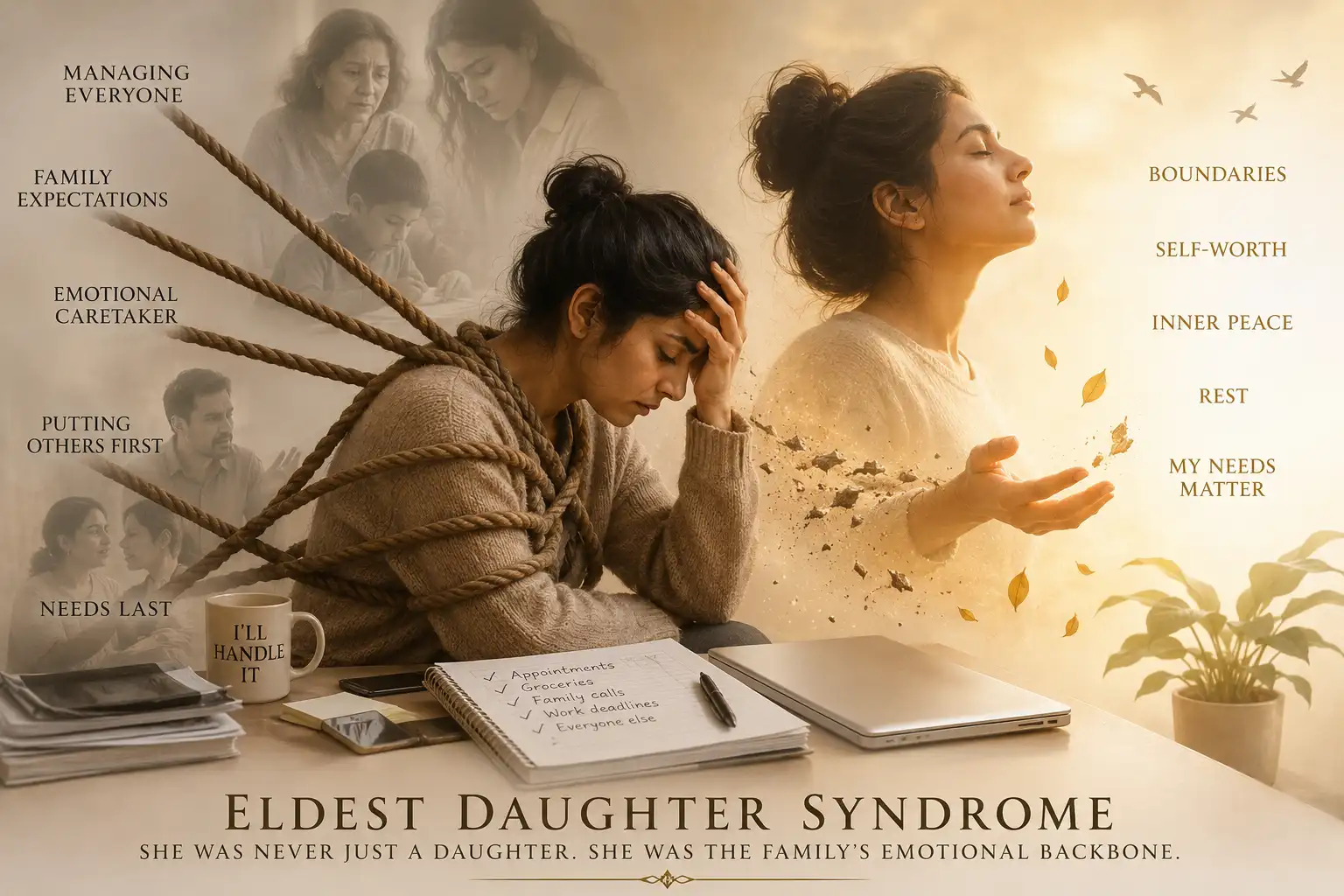
Nobody sat her down and gave her the job.
It just built up over the years, quietly. She became the one who books the doctor's appointments. The one Mummy and Papa call first. The one who keeps the peace between siblings and reads the mood in the room before anyone else has noticed it. She visits more, stays longer, calls more often, and feels guilty when she doesn't.
Her brother lives in the same city. Somehow, he's far less weighed down.
If this sounds familiar, you're not imagining it, and it isn't a personal failing. It's a pattern that runs through Indian family values, passed down across generations, and it shows up in families of every class, region and education level. Even the daughter who is a senior manager or a doctor ends up carrying it. In Family Constellation therapy, this kind of inherited role is often one of the first things we look at, because it rarely begins with the daughter herself.
In most Indian families, the daughter, especially the eldest, or the one who lives closest, carries something her brothers usually don't. It isn't just chores or logistics. It's emotional labour: managing everyone's feelings, keeping the family harmonious, and being the emotional glue that holds things together. Nobody counts it, and nobody thanks her for it, because it's so invisible.
The numbers back this up. Research on gender and unpaid work in India (NCAER, 2022; ILO reports on South Asia) keeps finding the same thing: women do most of the unpaid care work, including looking after elderly parents, no matter how much they earn or how senior their job is. A salary doesn't buy her out of the role. She just does both.
Here's the thing: your family didn't invent this expectation to be unfair to you. It was handed down, and most of us absorbed it long before we were old enough to question it. A few things keep it going:
This is also where Family Constellation therapy can help. It looks at the family as a whole system, including the unspoken loyalties and roles passed from one generation to the next, so you can finally see whose weight you've been carrying.
This role takes a real toll, and it's almost never acknowledged by the family that depends on it.
Let's be clear: this isn't a call to walk away from your parents, or to turn your back on the values of closeness and care that make Indian family life so rich. Those values matter.
It's an invitation to see the role clearly, where it came from, what it costs and why it's unevenly shared, and then to choose how you want to carry it, instead of following a script you picked up as a child.
Giving out of love and giving out of compulsion are not the same thing. The difference matters for you, for your parents, and for the daughters who are watching you and learning what a woman's duty looks like.
You can honour your parents and still say what that honouring has cost you. You can carry the duty and still ask if it's being shared fairly. You can love them deeply and still notice that the expectation of your sacrifice, and not your brother's, deserves a second look.
That isn't ingratitude. It's the start of choosing, maybe for the first time, what you want to keep carrying and what you're ready to put down.
If the weight of duty in your family feels older and deeper than your own life, Family Constellation therapy can help you understand what you've inherited and begin choosing differently. When you're ready, get in touch with us.
In most Indian families, caregiving is passed down by example. Daughters watch their mothers and grandmothers care for elders and absorb the idea that this is what a “good daughter” does. Gender norms, family expectations and guilt keep the pattern going, even when sons live nearby.
Emotional labour is the invisible work of keeping everyone’s feelings steady and the family peaceful. It includes mediating between siblings, remembering birthdays, handling parents’ moods and being the first person everyone calls. In many Indian families, daughters do most of it without recognition.
No. Setting boundaries is not disrespect or ingratitude. You can honour your parents and still be clear about what you can realistically give. Healthy limits often make the relationship stronger, because your care comes from choice rather than guilt or pressure.
The guilt is usually learned, not a sign that you’re doing something wrong. It builds up from childhood messages about duty, sacrifice and being a “good” daughter. Recognising where the guilt comes from is the first step toward loosening its hold.
Long-term caregiving stress is linked to poor sleep, constant tiredness, weaker immunity and burnout. It can also limit career choices, such as where you live, which jobs you take and how much you travel. Over time it can also strain your marriage and your sense of identity.
Family Constellation therapy is a healing approach that looks at the family as one connected system. It helps you see the hidden roles, loyalties and patterns passed down through generations. Many daughters find it useful for understanding why they carry so much and for choosing what to keep and what to put down.
Start by naming the role you’ve been playing and noticing where the load is uneven. Talk openly with siblings about sharing responsibilities, set realistic limits, and make time for your own needs. If the pattern feels too deep to change alone, a Family Constellation session can offer clarity and support.