Burnout
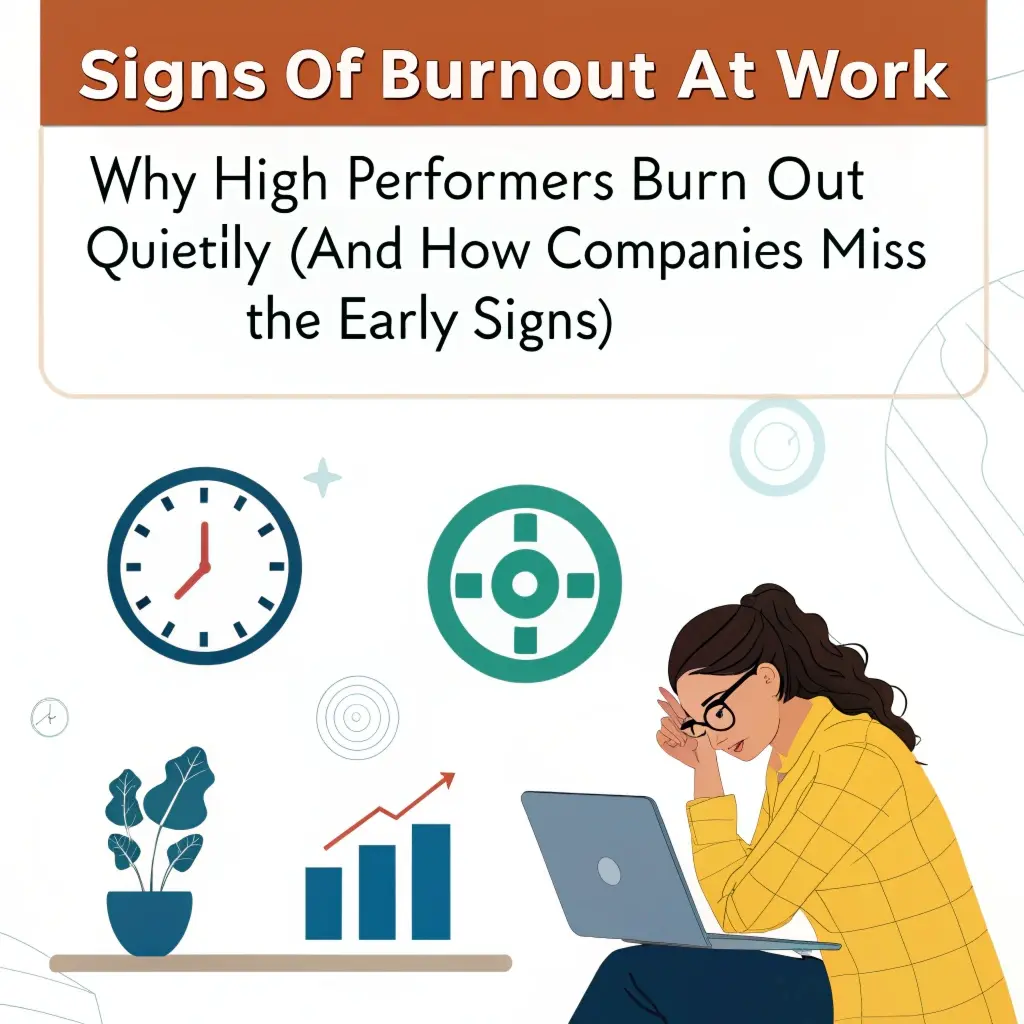
Signs of Burnout at Work: Why High Performers Burn Out
Signs of burnout at work in high performers. Learn early warning signals, business impact, and what HR can do before silent resignations begin.
16 January 2026
There’s a specific kind of employee every company loves.
They take ownership, show leadership without a title, and carry pressure like it’s normal.
These are the exact people who burn out the fastest — quietly, invisibly, and without warning.
Not because they’re weak. But because they are too capable.
In corporate culture, high performers don’t always “break down.” Sometimes… they simply fade out.
And by the time HR notices, the resignation email is already drafted.
This is why knowing the real signs of burnout at work is no longer optional for companies. It’s a retention strategy.
Why high performers burn out quietly (and no one sees it coming)
High performers don’t ask for help early. They don’t complain. They don’t show “weakness.”
They keep pushing… until the nervous system says, enough.
What makes it worse is the workplace reward system.
- taking on extra work
- staying late
- solving other people’s mistakes
- being available 24/7
- “managing everything calmly”
So over-functioning becomes their identity.
The real signs of burnout at work (especially in high performers)
Burnout doesn’t always look like stress.
Below are the most common signs of burnout at work that companies miss — because performance still looks “fine” on paper.
1) They stop feeling excited about wins
They still hit targets… but there’s no joy.
- “It’s okay, just doing my job.”
- “This is expected.”
- “Doesn’t matter.”
The spark disappears. And when the spark goes, disengagement follows.
2) Focus drops, but output still stays high
They can maintain output even when mentally exhausted.
- taking longer to reply to simple emails
- forgetting small details
- difficulty prioritising
- brain fog in meetings
- reading the same message 2–3 times
They’re still delivering. But it’s costing them double the energy.
3) They become “less available” emotionally
- speaking less
- avoiding discussions
- giving fewer ideas
- emotionally disconnecting
4) They become unusually perfectionistic (or controlling)
Burnout can push high performers into over-control because it gives them a false sense of safety.
- they can’t delegate
- they micromanage
- they overthink small tasks
- they become rigid about standards
This is the nervous system trying to survive.
5) They stop taking initiative
- they can’t delegate
- they micromanage
- they overthink small tasks
- they become rigid about standards
6) Their health starts speaking for them
Burnout isn’t just emotional. It’s physical.
- headaches or migraines
- acidity / gut issues
- disturbed sleep
- constant fatigue
- shoulder-neck pain
- low immunity
Your employee might not say, “I’m burning out.”
What happens when organisations miss these early signs?
A high performer doesn’t resign suddenly.
They resign after months of silent burnout.
First they lose energy. Then they lose interest. Then they lose attachment.
- productivity drop (hidden)
- mistakes under pressure
- slower decision-making
- leadership fatigue
- team morale decline
- client handling issues
The highest cost is not resignation. The highest cost is losing them mentally months before they leave physically.
What HR and Leadership should do (before burnout becomes attrition)
Here’s what works in corporate environments:
1) Track workload sustainability (not just output)
Many employees deliver because they’re scared, not because they’re okay.
- capacity
- emotional load
- stress recovery habits
- weekly energy level mapping
2) Train managers to detect burnout in high performers
Most managers detect burnout only when performance drops.
But high performers maintain performance — and suffer quietly.
- emotional withdrawal
- initiative drop
- perfectionism increase
- decline in enthusiasm
3) Shift from “employee motivation” to “employee regulation”
Burnout is nervous system dysregulation.
- stress reset tools employees can apply daily
- emotional regulation workshops
- somatic recovery techniques
Corporate Burnout Reset Program (HR & Leadership)
At The Healing Room, we partner with companies to address burnout before it becomes resignation.
Our corporate wellness interventions focus on:
- nervous system reset
- emotional resilience
- burnout prevention for high performers
- regulation-based recovery tools
- workplace wellbeing sessions
If your organisation is seeing employees who are still performing but feel emotionally disconnected — those are signs of burnout at work.
And early intervention can save talent, leadership energy, and culture.
📩 For corporate programs and workshops, connect for an assessment call.
What are the early signs of burnout at work?
Frequently Asked Questions
Early signs include constant fatigue, brain fog, reduced motivation, emotional withdrawal, and difficulty focusing even if the employee is still performing well.
Yes. High performers often hide stress, keep delivering results, and silently push through exhaustion. That’s why their burnout is usually detected too late.
Work stress is usually short-term and improves with rest. Burnout is long-term emotional and mental exhaustion where even rest doesn’t feel enough, and motivation starts declining.
HR can prevent burnout by monitoring workload capacity, training managers to notice early warning signs, creating psychological safety, and offering nervous-system-based wellbeing programs.
Companies should intervene early by reducing workload pressure, offering wellbeing support, encouraging boundary setting, and providing structured recovery programs before it leads to disengagement or resignation.
Keep reading