Emotional Health
Why You Feel Emotionally Stuck Even When Life Is Fine
Emotional stuckness can exist even when life looks fine. Discover hidden family dynamics and how awareness and healing create inner movement.
By Sonali Mittra · 17 December 2025
What is emotional stuckness?
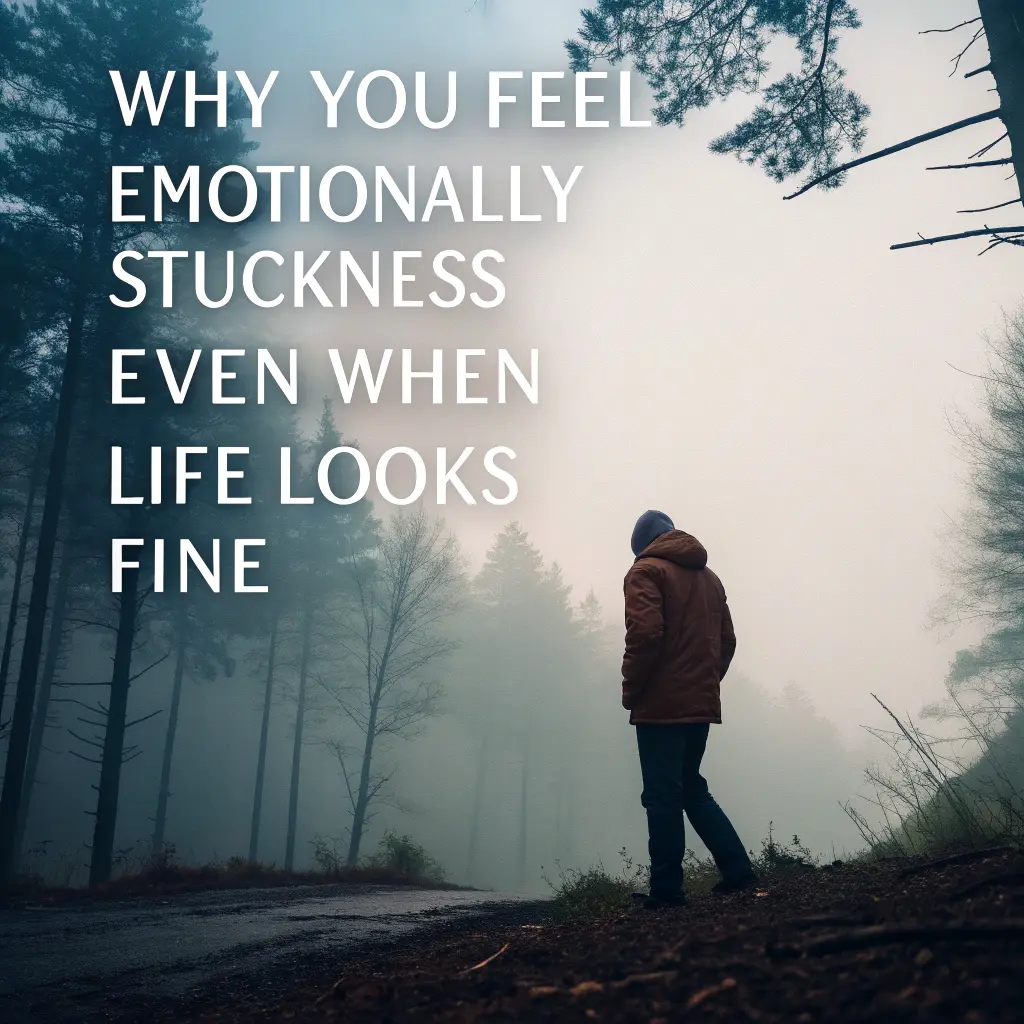
“Emotional stuckness” is not a clinical diagnosis. It is a way of describing a state where life looks okay on the surface, but something feels blocked inside. You may feel disconnected from joy, direction or meaning, as if you are going through the motions. It often leads to self-doubt, and you may start wondering whether you are ungrateful, lazy or simply overthinking.
When everything looks okay but feels heavy inside
You wake up tired even after rest. Small things trigger big emotions. You feel disconnected from joy, direction or meaning. There is a quiet question running in your mind: “Why do I feel stuck when nothing is actually wrong?”
This inner confusion is often a sign of emotionally stuckness—a state where life looks okay on the surface, but something feels blocked inside. It slowly leads to self-doubt. You start wondering if you’re ungrateful, lazy, or simply overthinking.
But what you are experiencing is far more common, and often much deeper, than you realise. If the tiredness also shows up in your body, our post on psychosomatic symptoms may help.
Emotional Stuckness Is Not Laziness or Failure
Feeling stuck in life emotionally has nothing to do with a lack of motivation or discipline. Many emotionally stuck people are actually high-functioning, responsible, and resilient on the surface.
The real issue is the gap between external functioning and internal flow.
You may be successful on paper, but emotionally blocked inside. This is why generic motivation tips don’t work. Positive thinking, affirmations, or pushing harder only address the surface. They don’t touch the emotional roots that are quietly holding you back.
When inner movement is blocked, no amount of external success feels satisfying. If this describes you, read about the hidden cost of success.
Common signs of emotional stuckness
- Feeling tired even after rest, or flat and numb on many days
- Going through the motions without much joy, direction or meaning
- Strong reactions to small things
- Putting off the things that matter most to you
- Repeating the same emotional loops despite self-work
- Difficulty making decisions, or feeling that nothing is the “right” choice
- A quiet sense of “something is missing” that you cannot name
- Guilt for feeling this way when life looks good
Why you may feel emotionally stuck: possible causes
There is rarely one cause. Looking at the layers can help.
1. Exhaustion and overload
Years of pressure, caring for others and constant demands can leave little room for your own feelings. If this sounds familiar, you may find our guides to overthinking and anxiety in women and mental overload at work helpful.
2. Living by other people’s expectations
When your choices have been shaped by “shoulds” (what family, society or career expected), you can end up with a life that looks right but does not feel like yours.
3. Unprocessed grief and past experiences
Losses and experiences that never had space to be felt can sit quietly in the background and block inner movement.
4. Fear of change and self-sabotage
Sometimes part of you is afraid of what happens if things get better or different. Learn more about why we self-sabotage.
5. Hidden family dynamics
For some people, the block is connected to the family system. That is the layer we explore next.
Hidden family dynamics that create inner blocks
Very often, emotional stuckness is not created only by your present life. It can also come from hidden family dynamics. Unresolved trauma in a family does not disappear with time. It can be passed down emotionally. You may be carrying grief that was never expressed, fear that was never resolved, or pain that was never acknowledged.
In many cases, people are emotionally entangled with a parent or ancestor without knowing it. You may unconsciously carry someone else’s burden, living their sadness, struggle or unfulfilled life instead of your own. This can show up as emotional heaviness, lack of clarity or a constant sense of “something is missing.” If you want to explore this further, read feeling stuck in life: the hidden family roots and the signs of carrying generational trauma.
How Family Constellation explains emotional stuckness
Family Constellation Therapy looks at life from a systemic perspective. Instead of focusing only on the individual, it sees you as part of a larger family system. Its core ideas include:
- Emotional loyalty binds generations
- Excluded or forgotten family members create imbalance
- Unfinished stories seek resolution through later generations
You may feel emotionally stuck because, on a deeper level, you are being loyal to someone else’s pain. Or because part of the family story was never given its rightful place. Once these hidden dynamics are brought into awareness, the emotional system begins to reorganise itself, and inner movement becomes possible again.
It is important to be honest: research on Family Constellation is limited, so it is best seen as a complementary experience alongside professional care, not a treatment for any condition.
Signs your block may be systemic
You may be dealing with a systemic emotional block if you notice patterns like these:
- You keep repeating the same emotional loops despite self-work
- You feel fear or anxiety without a clear reason
- You experience guilt when things start moving forward
- Peace and happiness feel unfamiliar or unsafe
- You feel responsible for others, even at your own cost (see the saviour complex)
These signs do not mean something is wrong with you. They usually mean something old is asking to be seen.
Emotional stuckness or depression?
Feeling stuck can overlap with depression, and it can be hard to tell them apart alone. If your low mood is persistent, affects your sleep, appetite, energy or concentration, or you feel hopeless, it is worth speaking to a professional. Read more in our post on depression without a clear reason.
Please seek help if you have felt low, empty or hopeless most days for two weeks or more. If you ever have thoughts of harming yourself, reach out right away. In India you can call the emergency number 112 or Tele-MANAS at 14416 (free, 24x7), or go to the nearest hospital.
Conclusion
Feeling emotionally stuck when life looks fine does not mean you are failing. It often means you have been functioning for a long time without being heard by yourself. The causes can be physical, emotional, situational or tied to your family’s story, and often more than one at once.
Start with kindness, then curiosity. Small steps, honest conversations and the right support can bring movement back. If this post resonated with you, you do not have to work it out alone. Explore a Family Constellation session or talk to our team and we will suggest a gentle starting point. If you feel stuck in a wider way, our post on feeling stuck and caged in life may also help, and you can learn about Family Constellation Therapy with Sonali Mittra.
Frequently asked questions
Because feeling fine on paper and feeling fine inside are different things. Exhaustion, living by other people’s expectations, unprocessed grief or past experiences, fear of change, and sometimes hidden family dynamics can all leave you feeling blocked even when nothing is visibly wrong.
Emotional stuckness is a feeling of being blocked inside, even when life looks fine on the outside. You may feel disconnected from joy, direction or meaning and notice repeating emotional loops. It is not a clinical diagnosis, but it is a real and common experience.
Not necessarily, but they can overlap. If your low mood lasts most of the day on most days for two weeks or more, or affects your sleep, appetite, energy or concentration, please speak to a doctor or mental health professional.
For some people, moving forward can feel disloyal or unsafe, especially if they grew up around struggle, or if they carry a family story of loss or hardship. Guilt at this point usually signals an old pattern, not that you are doing something wrong.
They can be one layer. Unresolved grief, fear or loss in a family can shape how later generations feel and behave, sometimes through unconscious loyalty. This is rarely the only cause, so it helps to look at your health, stress and life circumstances too.
Family Constellation looks at your place in the family system and brings hidden dynamics, such as excluded members or unmourned losses, into awareness. Many people describe feeling lighter and clearer afterwards. Research on the method is limited, so it is best used as a complement to professional care, not a replacement.
Keep reading