Emotional Health
Depression Without a Clear Reason
Experiencing depression with no clear cause? Learn how hidden family trauma and generational patterns may create unexplained emotional pain.
By Sonali Mittra · 19 December 2025
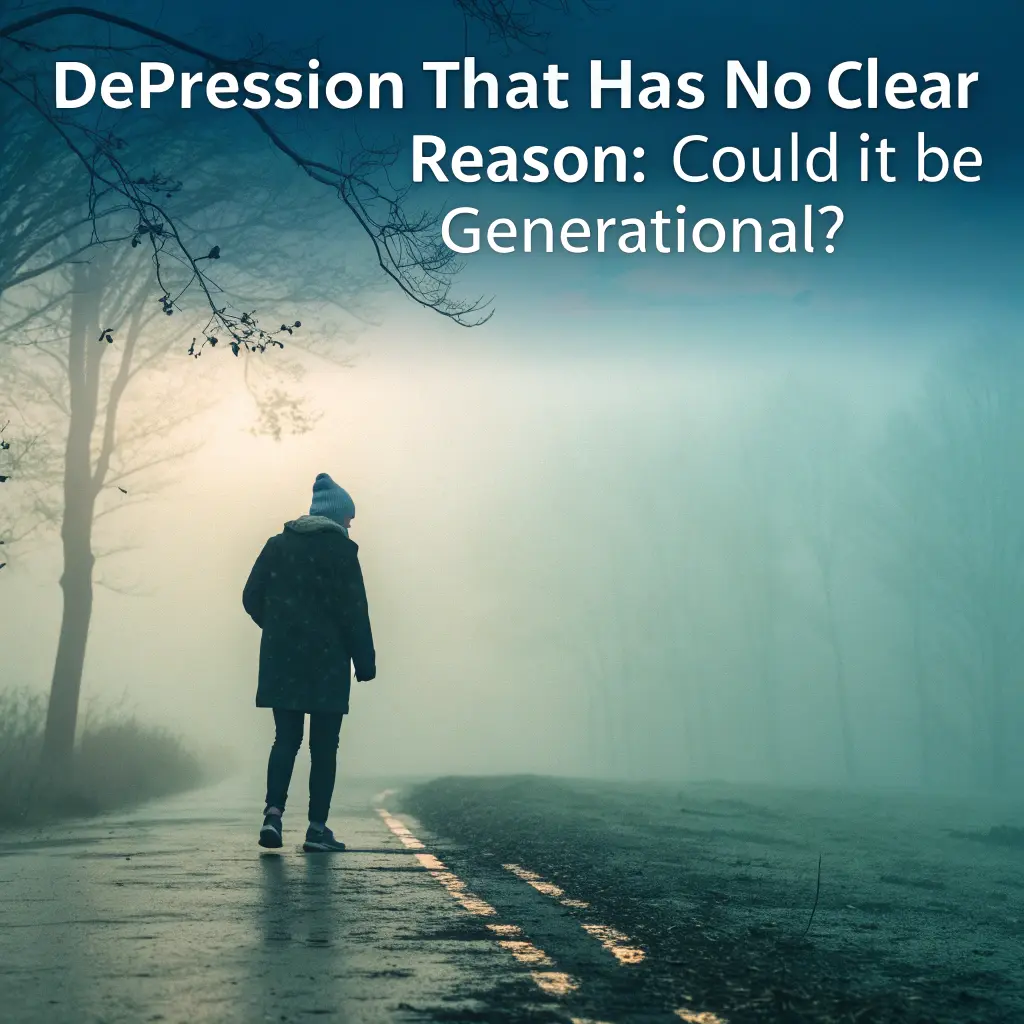
Have you ever felt deeply sad, heavy, or emotionally drained, yet you can’t point to a clear reason why? Your life may look “fine” from the outside, but inside there’s a quiet darkness that refuses to lift.
This kind of experience is more common than we talk about. And often, when people search for unexplained depression causes, they’re not broken. They’re sensing something deeper that hasn’t yet been named.
When Sadness Has No Story
There is a particular kind of sadness that confuses people the most.
You wake up feeling low, even after a good night’s sleep. There’s no recent loss, no obvious failure, no dramatic event. Yet your chest feels heavy, motivation is low, and joy feels distant.
This often brings guilt along with it.
You may think: “I shouldn’t feel this way.” “Others have it worse.” “What’s wrong with me?”
But what if nothing is “wrong” with you at all?
What if this sadness has a story—just not one that started with you?
Depression Is Not Always Personal
We are often taught to see depression as a reaction to life circumstances—stress, relationships, career pressure, or trauma we personally experienced.
And yes, sometimes depression is situational.
But many therapists and researchers now recognize another layer: emotional weight that doesn’t originate in the present moment.
This is where many unexplained depression causes live.
You may be carrying emotions that were never processed in your family system: grief, fear, loss, or shame that had no space to be felt when they first occurred. If this sounds familiar, you may want to read are you carrying family trauma that isn’t yours.
Your sadness may not be about your life. It may be about belonging, loyalty, and emotional inheritance.
Generational Trauma and Emotional Memory
Trauma doesn’t always end with the person who experienced it.
Wars, sudden deaths, miscarriages, abandoned children, suicides, family secrets, forced migrations, broken love stories—when these events are not acknowledged or grieved, they don’t disappear.
They live on as emotional memory in the family system.
Children and grandchildren may unconsciously carry:
- Persistent sadness
- A sense of emptiness
- Anxiety without clear cause
- Depression that feels “old” or heavy
This is not imagination. Research in epigenetics and trauma psychology is exploring how stress and trauma may influence emotional patterns across generations, especially when they were never given language or healing. Not sure whether this applies to you? Here are the signs of carrying generational trauma.
This is why unexplained depression causes often cannot be found by looking only at the present.
How Family Constellation Reveals Inherited Sadness
Family Constellation Therapy works at a systemic level.
Instead of asking, “What’s wrong with you?” It asks, “Who or what are you unconsciously carrying?”
In a constellation, hidden dynamics often emerge:
- A forgotten ancestor who died young
- A family member who was excluded or shamed
- An unresolved grief that was never mourned
- A child who stayed emotionally loyal to a suffering parent
Many people discover that their depression is connected to someone else’s unfinished story.
When the system finally acknowledges what was lost or excluded, the emotional burden no longer needs to be carried by the next generation. You can read more about how generational healing works in Family Constellation.
This is not about blame. It’s about restoring balance and belonging.
A Compassionate Path to Healing
If you are experiencing depression with no clear reason, please know this:
You are not weak. You are not broken. You are not failing at life.
You may simply be sensitive enough to carry what others couldn’t.
Healing doesn’t mean forcing positivity or “moving on.” It means gently turning toward what has been unseen—without judgment, without blame.
When the hidden story is acknowledged, the sadness often softens. Not because it was fought—but because it was finally understood.
If this resonates with you, a Family Constellation session can help you explore whether what you’re feeling truly belongs to you—or whether it’s time to give it back with love.
Healing can be gentle. Awareness can be freeing. You don’t have to carry this alone.
Conclusion: You Are Not Broken, You May Be Carrying More Than Your Own Story
Depression without a clear reason can feel confusing and lonely, especially when your life looks fine from the outside. But no visible cause does not mean there is no cause.
For some people, the roots are physical or hormonal. For others, they lie in long-term stress, grief that was never processed, or experiences that never had space to be felt. And for some, the heaviness may be connected to what was left unspoken in the family system.
Whichever layer applies to you, the first step is the same: stop blaming yourself. Feeling low is not weakness, ingratitude or failure.
Healing usually works best with more than one kind of support: medical or psychological care when needed, steady daily habits, people who listen, and, if it resonates with you, reflective approaches such as Family Constellation Therapy or Inner Child Therapy that explore the emotional story behind the feeling. These can be a gentle complement to professional care, not a replacement for it.
If your sadness has lasted two weeks or more, or it is affecting your sleep, appetite, work or relationships, please speak to a doctor or a mental health professional. If you ever have thoughts of harming yourself, reach out right away. In India you can call the emergency number 112 or Tele-MANAS at 14416 (free, 24x7), or go to the nearest hospital. You deserve support, and you do not have to wait until it gets worse.
If this post resonated with you, you do not have to carry it alone. Explore a Family Constellation session or talk to our team and we will suggest a gentle starting point.
This article is for information an
Frequently Asked Questions
Yes. Depression does not always have a clear trigger such as a loss or a crisis. It can build from a mix of factors, including genetics, hormones, long-term stress, health conditions, unprocessed emotions and family patterns. Feeling low when “nothing is wrong” is real and worth taking seriously.
Usually a combination of things. Brain chemistry and genetics, chronic stress, poor sleep, medical issues such as thyroid problems or nutritional deficiencies, and past experiences that were never fully processed can all contribute. Emotions can also show up as physical complaints, which we explain in our guide to psychosomatic symptoms. A doctor can help rule out physical causes.
Research on intergenerational trauma is still developing. It suggests that unresolved experiences in earlier generations, such as loss, migration or family secrets, can shape how families cope, relate and express emotion. This may be one layer behind a persistent heaviness, but it is not the only explanation. If unresolved family relationships are part of your story, our guide to healing family relationships may help.
Family Constellation Therapy looks at emotional patterns at the level of the family system. Instead of asking “What is wrong with me?”, it asks who or what you may be carrying unconsciously, such as an unmourned loss or an excluded family member. Many people describe feeling lighter and clearer afterwards. Research on the method is limited, so it is best seen as a complementary experience alongside professional care, not a medical treatment for depression.
This is very common. Many people tell themselves that others have it worse and that they should be grateful. Guilt on top of sadness only adds weight. Sadness does not need a justification to be valid, and acknowledging it without judgement is often where healing begins.
Start small. Keep a simple routine for sleep and meals, step outside for some daylight, move your body gently, and tell one trusted person how you feel instead of isolating. Writing down what you notice can also help. Do not force positivity. If you feel stuck in a loop, our post on emotional stuckness may help, and so may inner child healing for hidden sadness. If the feeling continues, speak to a professional.
Keep reading