
Men & Emotional Healing
Therapy for Men Who Won't Go to Therapy: Here's What Actually Works
A different kind of healing for men who are done pretending everything is fine
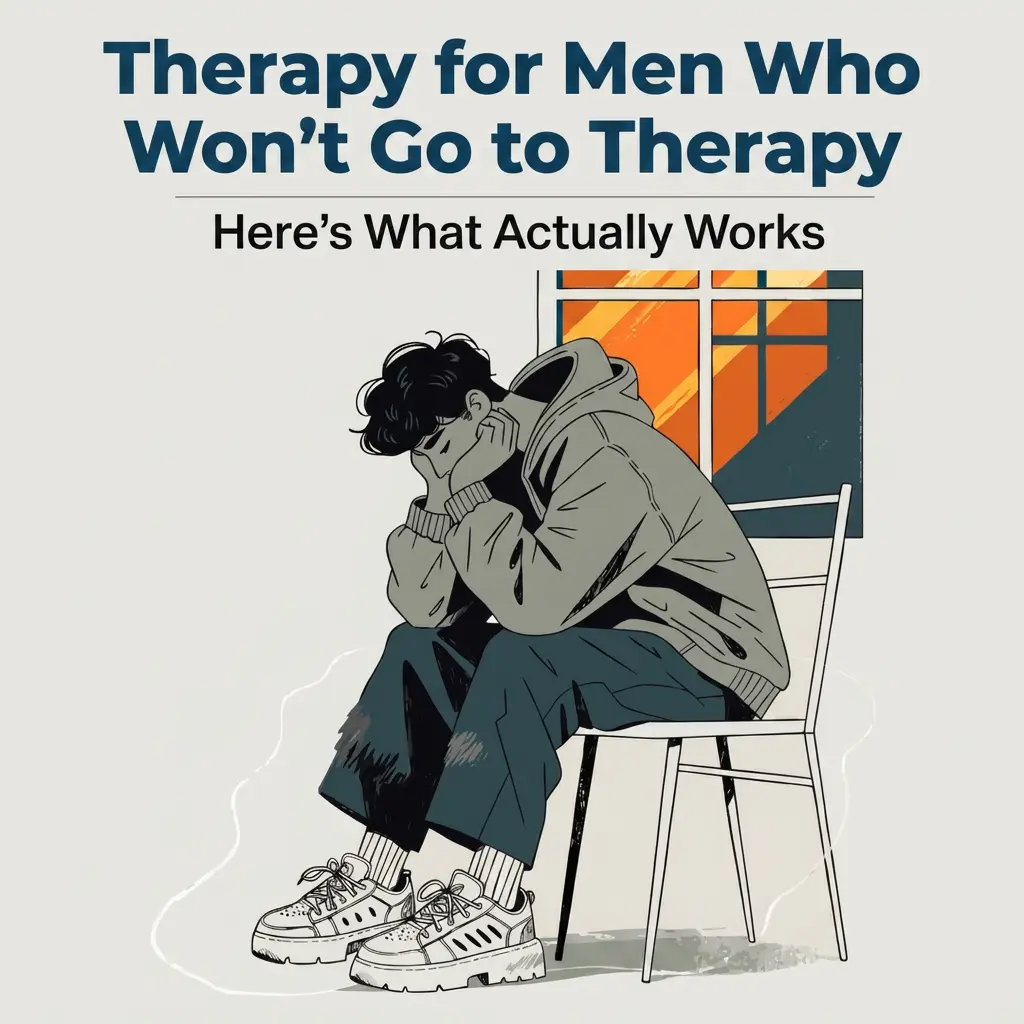
Let’s be honest about something. The standard therapy model, sitting across from someone, talking about your feelings, week after week, excavating childhood, is not an easy sell for most men who won’t go to therapy. Real therapy for men doesn’t always have to look like this. It is not that men do not have inner lives. It is not that they do not suffer. It is that the format asks for something many men were never taught to do: to sit with vulnerability in the presence of a stranger, and name it out loud.
The spotlight on men’s mental health has intensified significantly in 2026. The stigma is shifting. More men are beginning to acknowledge that carrying everything silently is not strength; it is a kind of slow damage. But acknowledgment and action are different things. And the action most commonly recommended, going to therapy, still meets significant resistance.
Family Constellation Therapy is different. And it is worth understanding why this form of therapy for men, in particular, often feels more accessible and more comfortable to begin with than the conventional therapeutic path.
Why Traditional Therapy Can Feel Like a Trap for Many Men
Traditional talk therapy, at its best, is extraordinary, and it has helped countless people. But its format makes specific demands: sustained verbal self-disclosure, emotional articulation, a tolerance for sitting in unresolved states over long periods. These are skills that require practice, and many men, through no fault of their own, were raised in environments where those skills were neither modelled nor encouraged.
The man who is told by his partner, his doctor, or his own exhausted inner voice to “go and talk to someone” often arrives at therapy not knowing how to talk about what is wrong, because he has never had permission or practice to do so. The therapy can then feel like one more arena in which he is failing.
This is not a criticism of those men. It is a gap between the model and where many men are starting from.
This is not a criticism of those men. It is a gap between the model and where many men are starting from.
What Real Therapy for Men Can Look Like: Family Constellation
Family Constellation works systemically, not individually. Its focus is not only on what you feel and why; it also looks at what your family system carries, and how that has shaped the life you are living now. This subtle distinction matters.
Many men find it easier to engage with a question like “what happened in your family?” than “what do you feel right now?” The systemic frame is intellectually interesting, practically grounded, and does not require the same sustained verbal vulnerability that classical therapy does. For many men, it becomes a way in, a starting point that feels less exposing.
In a constellation session, the work happens through movement, placement, and representation, not through extended verbal processing alone. A man can gain real insight into his relationship with his father, his compulsive work patterns, or his difficulty accepting love, not only by talking about it for months, but by witnessing it spatially represented in front of him, often within a single session.
This is not shallow work. For many men, it can feel just as meaningful as long-term talking therapy, partly because it works around the intellectual defences that can otherwise keep men safely distant from their own experience.

What Men Most Commonly Bring to Constellation
Based on work with male clients across a wide range of backgrounds, the themes that men bring most frequently to Family Constellation include:
The father wound:
A relationship with a father who was absent, emotionally unavailable, critical, or broken, and the ways this has shaped identity, confidence, authority, and intimacy
Work and financial patterns:
Compulsive overworking, chronic financial struggle, difficulty receiving success, often rooted in family scripts about what men must provide, sacrifice, or compensate for
Anger without an obvious cause:
A persistent irritability or volatility that seems disproportionate to the moment, sometimes an echo of ungrieved family pain, carried across generations
Relationship patterns:
Pushing away what is good, partners, opportunities, friendships, in ways that can be hard to explain, even to oneself
The weight of being "the strong one":
The exhaustion of a lifetime of holding everything together for others, with little acknowledged space to be held in return
What the Session Actually Looks Like
In a one-to-one constellation session, there is no group, no audience, and no pressure to perform emotion. The practitioner works with the client to map the family system using simple representatives (figures, floor markers, or visualisation) and to explore what the system reveals.
Most men leave their first session surprised, not by what was hard, but by what moved. By the unexpected clarity that comes from seeing a family dynamic represented externally, and by the sense of something shifting that they did not quite anticipate.
Most men leave their first session surprised, not by what was hard, but by what moved.
By the unexpected clarity that comes from seeing a family dynamic represented externally, and by the sense of something shifting that they did not quite anticipate.
A Quick Note
Family Constellation can be a powerful, accessible starting point, especially for men who won’t go to therapy in its traditional form. But it isn’t a replacement for professional mental health care. If you’re dealing with ongoing depression, intense anger, thoughts of self-harm, or the effects of significant trauma, please also speak with a doctor or licensed mental health professional. Family Constellation works well alongside this kind of care, not instead of it.
If Nothing Else Has Felt Right
If you are a man who has been putting off getting help because nothing on offer has quite felt right, this might be worth exploring. It respects intelligence. It respects restraint. And for many men who won’t go to therapy in the usual sense, it becomes a real way in, a form of therapy for men that finally feels possible.
Ready to experience this for yourself?
Sessions available online worldwide.