Why Do I Feeling Stuck and Caged in My Life?
On Invisible Loyalties, Emotional Imprisonment, and the Fear of Becoming
Feeling stuck in life is often far more complex than simply lacking motivation or direction. There are people whose lives appear functional from the outside. They wake up on time. They answer emails. They attend meetings, maintain relationships, pay bills, travel occasionally, and perform the rituals of adulthood with reasonable efficiency. Nothing is visibly wrong. And yet, beneath this choreography of normalcy, there exists a persistent sensation—subtle but relentless—that life is not moving.
Not forward.
Not inward.
Not anywhere.
The Body Knows Before the Mind Does
Long before the mind consciously recognises stagnation, the body begins to register it. Exhaustion without reason. Restlessness during silence. Anxiety on Sundays. A heaviness in the chest when thinking about work, relationships, or even the future. The body senses confinement before language catches up to it.
Many people believe they are stuck because they lack motivation, discipline, clarity, or opportunity. But in therapeutic and systemic work, what emerges repeatedly is something more complicated: people are often not blocked by the future. They are bound by invisible loyalties to the past.
Family Constellation therapy speaks deeply to this phenomenon. It suggests that human beings unconsciously inherit emotional positions within the family system. A child may carry the sadness of a parent, the silence of a grandmother, the sacrifice of an ancestor, or the fear of surpassing those who came before them. These loyalties are rarely conscious. In fact, they often masquerade as personality.
A woman says, “I don’t know why I sabotage every opportunity.” But beneath that sentence may exist an unconscious loyalty:
“If I become successful, I leave my mother behind.”
A man says, “I always feel guilty when I rest.” But perhaps somewhere in his lineage, survival depended on constant labour, and ease became associated with danger.
People do not only inherit eye colour and surnames. They inherit emotional realities.
The Cage Is Often Internal
Modern culture encourages external explanations for internal suffering. We blame jobs, partners, cities, economies, timing. Sometimes these are legitimate contributors. But often the deeper imprisonment is psychological.
Access Consciousness describes this through the idea of points of view solidifying into reality. Human beings become trapped not only by circumstances but by conclusions they have made about themselves and the world.
“I am not capable.”
“I always fail.”
“I cannot trust people.”
“I must struggle to deserve anything.”
“Things never work out for me.”
The mind repeats these conclusions so frequently that they begin to feel factual. Eventually, people stop perceiving life directly and start perceiving it through accumulated judgments.
And judgment is one of the most efficient prisons ever created.
Because once a person concludes something about themselves, they stop asking questions. Curiosity disappears. Possibility narrows. The psyche becomes repetitive.
Access work often begins not with answers, but with dismantling certainty.
What if you are not stuck?
What if you have simply been functioning from a limited emotional map?
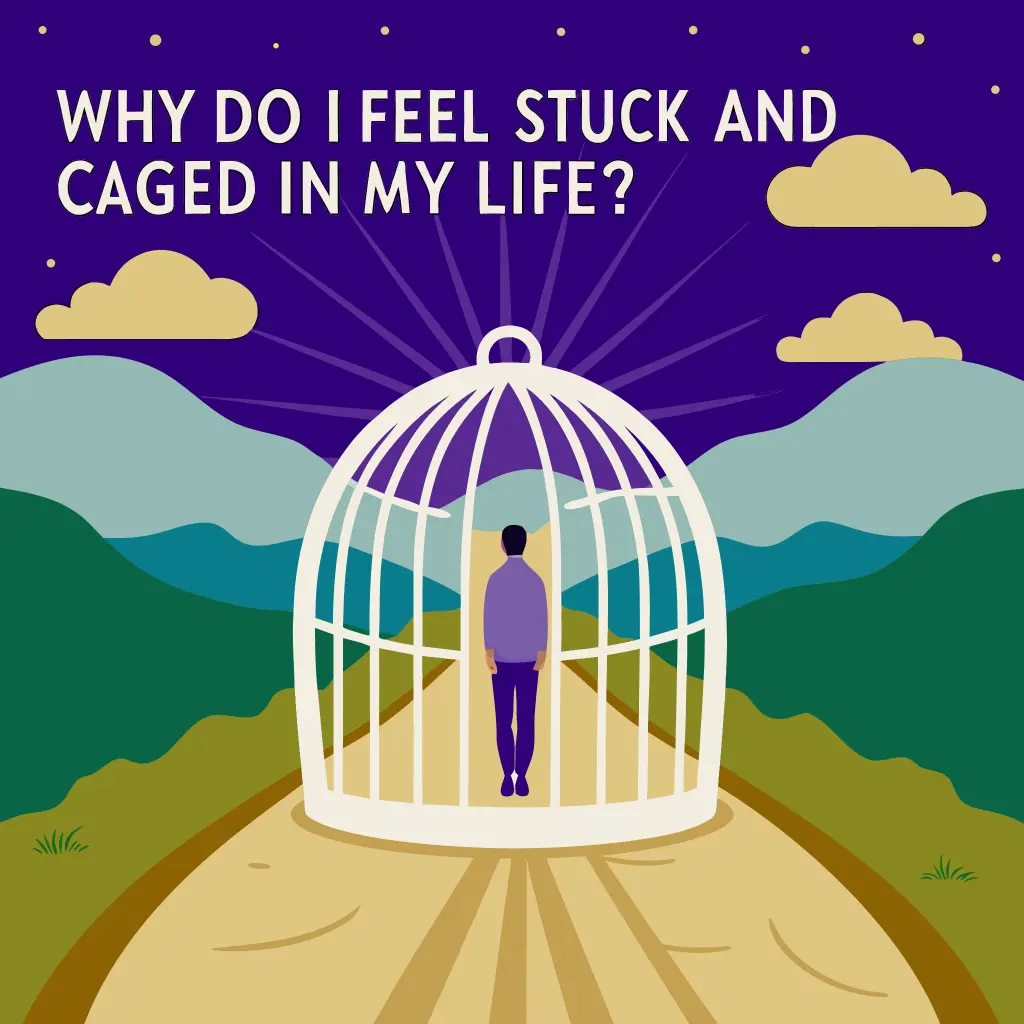
What if the cage is not reality, but interpretation?
This is not positive thinking. It is perceptual disruption.
The Inner Child Does Not Disappear
Inner Child Healing introduces another dimension to this experience. The “stuckness” many adults experience is often the emotional age at which part of them stopped developing freely.
Trauma does not always appear as catastrophe. Sometimes it appears as chronic emotional invalidation. A child who constantly feels unseen, criticised, emotionally unsafe, or responsible for others begins to suppress aspects of themselves in order to maintain attachment.
The child learns:
Do not speak too loudly.
Do not need too much.
Do not fail.
Do not upset anyone.
Do not become difficult.
Do not outgrow the family system.
And so the child adapts.
The problem is that adaptation, when repeated long enough, becomes identity.
Years later, the adult feels trapped but cannot explain why. Because the imprisonment is not physical. It is developmental. A part of the psyche still believes freedom is unsafe.
This is why many people feel paralysed before change. Not because they do not want freedom, but because somewhere in the nervous system, freedom still feels dangerous.
To become larger than the identity the family assigned you often feels like betrayal before it feels like liberation.
Why Does Expansion Feel So Uncomfortable?
Human beings romanticize transformation but rarely acknowledge its psychological cost. Every genuine expansion destabilizes the familiar self. And the familiar self, even when unhappy, feels safer than the unknown.
This is why people often remain in:
- dead relationships
- unfulfilling careers
- emotional exhaustion
- chronic self-doubt
- repetitive cycles
not because they enjoy suffering, but because suffering has become organised. Predictable. Familiar.
The unknown requires a different nervous system.
Family Constellation work frequently reveals that people unconsciously remain small out of love. If a parent struggles financially, the child may unconsciously fear abundance. If a mother suffered in marriage, the daughter may unconsciously associate love with sacrifice. If joy was unsafe in the family system, happiness itself can create anxiety.
People often ask:
“Why do I sabotage myself?”
A more useful question may be:
“Who would I become if I no longer carried this suffering?”
Because identity frequently forms around pain. To release the pain means reconstructing the self. And that process is deeply disorienting.
A Small Exercise: Meeting the Cage
Find a quiet place. Sit comfortably. Close your eyes.
Imagine the part of your life where you feel most trapped. Do not analyse it. Simply notice it.
Now ask yourself slowly:
“What am I afraid will happen if I truly become free here?”
Do not search for a clever answer. Let the body respond before the mind does.
Notice:
- What emotions arise?
- What memories appear?
- Whose voice do you hear internally?
- What guilt surfaces?
Now place your hand on your chest and say:
“I acknowledge the parts of me that learnt to survive by staying small.
And I am willing to see what else is possible now.”
Sit with discomfort. Do not rush to fix it.
Awareness itself begins dissolving the cage.
Freedom Is Not Always Loud
People imagine freedom dramatically. They imagine quitting jobs, moving countries, ending relationships, reinventing themselves.
But often freedom begins much more quietly.
In a boundary.
In a question.
In saying no without guilt.
In resting without proving exhaustion first.
In allowing joy without immediately preparing for loss.
The cage rarely breaks all at once. It loosens. Slowly. Until one day, the life that once felt suffocating no longer fits the person you have become.
Ready to Explore What Is Keeping You Stuck?
At times, what keeps us trapped cannot be solved through logic alone. Patterns rooted in childhood conditioning, family systems, emotional trauma, or energetic limitations often require deeper exploration and guided awareness.
If this blog resonated with you, perhaps it is time to ask a different question – not “What is wrong with me?” but: “What part of me is waiting to be freed?”
You can book a clarity call here: Book a Clarity Call with Sonali Mittra