
Work & Focus
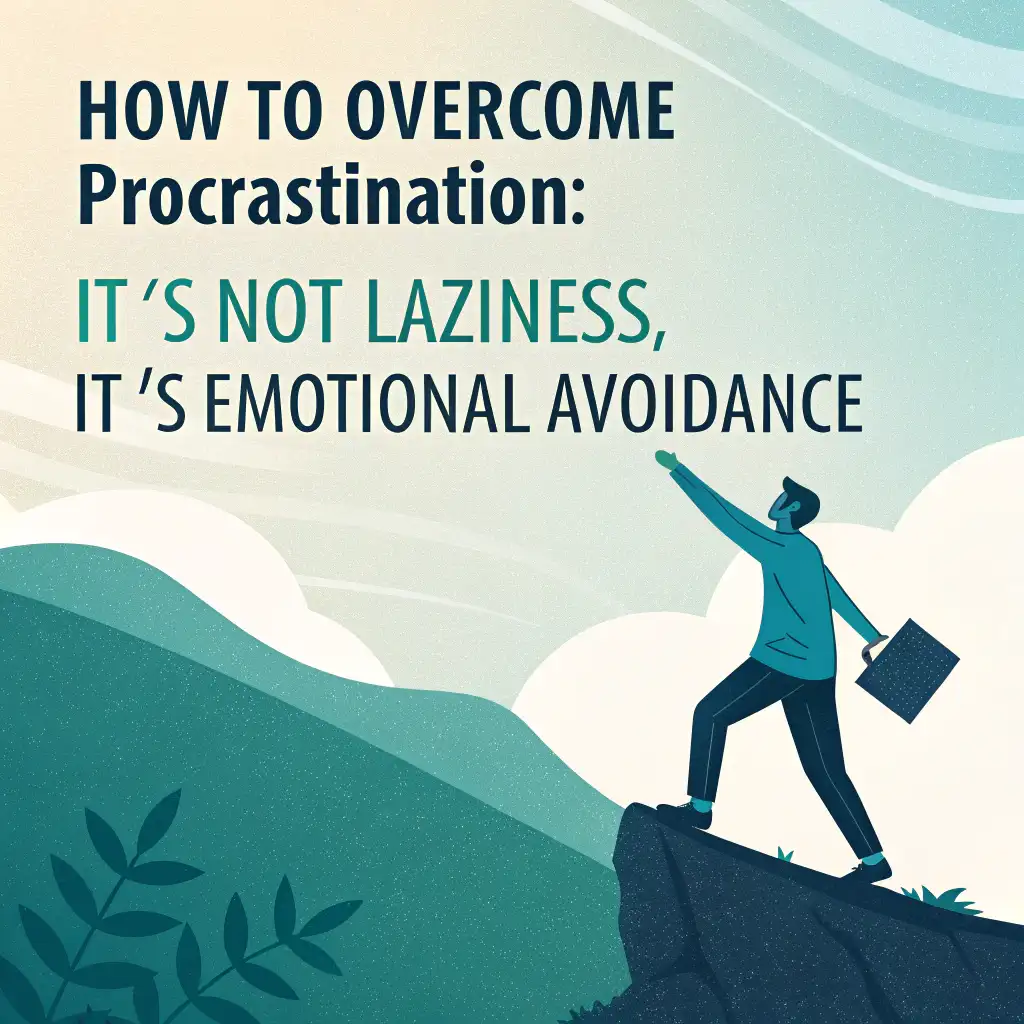
How to Overcome Procrastination: It's Not Laziness
How to overcome procrastination by understanding emotional avoidance. Learn why you delay tasks and how to take action without overthinking.
8 April 2026
At events like She Leads India 2026, hosted by SheThePeople in Gurgaon, conversations around leadership often move beyond strategy and into something more intimate – our habits, our fears, our quiet resistance to action. Among the many themes discussed, one stood out with uncomfortable clarity: procrastination.
We tend to treat procrastination as laziness. A failure of discipline. A moral shortcoming. But what if that is fundamentally incorrect?
Procrastination is not laziness. It is emotional avoidance. This reframing changes everything – and becomes the foundation of understanding how to overcome procrastination.
What Procrastination Really Looks Like
Procrastination rarely appears as doing nothing. Instead, it disguises itself as productivity. You clean your house. You organize files. You create detailed plans. You watch videos on how to do the work instead of doing the work itself.
It is sophisticated avoidance – keeping yourself busy enough to feel justified, while quietly escaping the task that actually matters.
Another form is waiting for the “right mood.”
“I’ll do it when I feel motivated.” “I’m not in the mood today.” “I need the right energy to begin.”
This belief assumes that action follows emotion. In reality, action often precedes emotion. Waiting becomes a trap.
Then there is overthinking. Planning too much. Researching endlessly. Asking too many people. Waiting for clarity that never arrives.
The Psychology Behind Procrastination
At its core, procrastination is driven by discomfort.
Fear of failure.Fear of judgment.Fear of not being good enough.
Alongside this sits perfectionism – the belief that the work must be flawless before it is even begun. And beneath both lies self-doubt.
We avoid tasks not because they are difficult, but because they make us feel something we do not want to feel.
Procrastination is an emotional regulation strategy.
Instead of facing these emotions, we distract ourselves. We numb out. We postponed it.
The Life You Want Is Hidden Behind What You Avoid
There is a striking insight that emerges repeatedly: the desirable life is usually hiding behind the work you are avoiding.
Not the easy work. Not the familiar work.
The conversation you are postponing.The project you are delaying.The risk you are unwilling to take.
Avoidance creates temporary relief. But it also creates long-term stagnation.
You stay where you are – not because you cannot move forward, but because moving forward requires feeling something you would rather not feel.
Why We Were Never Taught This
Most of us were never taught how to process emotions. We were taught to achieve, to perform, to succeed. But not to sit with discomfort. So when difficult emotions arise, avoidance becomes the default response. We distract ourselves with work, entertainment, or endless preparation. Anything to avoid direct contact with what we feel. This is why procrastination persists despite awareness.
Knowing what to do is not the problem. Feeling what comes with doing it is.
How to Overcome Procrastination (Without Forcing Yourself)
The solution to how to overcome procrastination is not harsher discipline. It is deeper awareness. Start by identifying what you are avoiding. Make a list. Be specific.
Then ask a simple but powerful question: “What am I avoiding feeling if I do this?” This question shifts the focus from the task to the emotion. Once identified, the next step is not to eliminate the feeling – but to allow it. Go through the emotion instead of around it. This might look like sitting with discomfort for a few minutes before starting. Or using practices that help release emotional tension.
Modalities like meditation, somatic breathwork, or techniques such as Emotional Freedom Technique (EFT) can help process these emotions physically and mentally. The goal is not to remove resistance entirely, but to reduce its control over your actions. Small shifts matter.
Take one imperfect step. Start before you feel ready. Act without complete clarity.
Each action weakens the pattern of avoidance – and this is the real practice of how to overcome procrastination.
Execution Over Perfection
A recurring idea across discussions was this: your work does not need to be unique, but your execution can be. This applies deeply to overcoming procrastination.
Waiting for the perfect plan, the perfect timing, or the perfect version of yourself delays progress indefinitely. Execution creates momentum. Momentum creates confidence. Confidence reduces fear. It is a cycle – but one that must be initiated through action, not thought.
Final Reflection
Procrastination is not a time management issue. It is an emotional one. To overcome it is not to become more disciplined, but more honest.
Honest about what you fear.Honest about what you avoid.Honest about what you want.
Because in the end, the work you are avoiding is rarely just work.
It is identity.It is growth.It is the next version of your life, waiting – quietly, persistently – on the other side of your resistance.
Frequently Asked Questions
Procrastination is the act of delaying important tasks. It is often driven by emotional avoidance rather than laziness.
To overcome procrastination, focus on understanding the emotions behind avoidance, take small actions, and start before you feel ready.
No, procrastination is usually caused by fear, self-doubt, or emotional discomfort — not laziness.
Common causes include fear of failure, perfectionism, overthinking, anxiety, and lack of emotional regulation.
People delay tasks to avoid uncomfortable emotions like fear, stress, or self-doubt, making procrastination a coping mechanism.
Break tasks into small steps, take immediate action, and avoid waiting for perfect clarity before starting.
Knowing what to do is not the issue — avoiding the emotions associated with doing it is what causes procrastination.
Yes, perfectionism creates pressure to do things flawlessly, which leads to delay and avoidance.
Start with one small step, set a short timer, and focus on progress instead of perfection.
It depends on the individual, but consistent small actions and emotional awareness can gradually reduce procrastination patterns.
Keep reading

Toxic Relationship
Signs of a Toxic Relationship (And How Victim Mentality Keeps You Stuck in One)

Family Patterns