
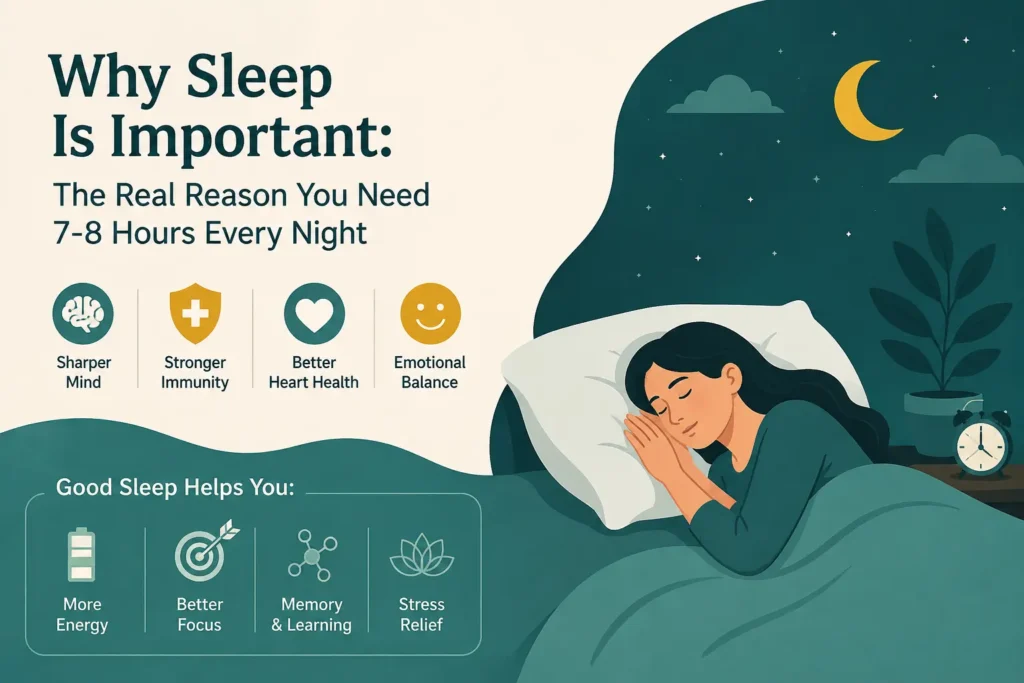
Why Sleep Is Important: The Real Reason You Need 7-8 Hours Every Night
Most of us treat sleep like it is optional. We push it back for one more episode, one more work email, one more scroll on the phone. But sleep is not a luxury. It is one of the most important things your body does every single day. Understanding why sleep is important can change how you think about your daily routine, your energy levels, and even your long-term health.
In this blog, we will look at why sleep matters so much, what actually happens inside your body while you sleep, what goes wrong when you don't get enough of it, and simple, practical ways to improve your sleep quality starting tonight.
What Actually Happens When You Sleep
Sleep is not a single, flat state. Your body moves through several cycles every night, each one made up of different stages. Early in the night, you move through light sleep, then deep sleep, and finally REM (Rapid Eye Movement) sleep, where most dreaming happens. This cycle repeats every 90 minutes or so, several times a night.
During deep sleep, your body repairs tissue, builds muscle, and strengthens your immune system. During REM sleep, your brain processes emotions, consolidates memories, and organizes the information you took in during the day. If either of these stages gets cut short, your body and mind don't get the full benefit of rest, even if you technically spent enough hours in bed.
Why Sleep Is Important for Your Body
While you sleep, your body is not just resting. It is repairing muscles, balancing hormones, and clearing out toxins from the brain through a process called the glymphatic system. This is why sleep is important for physical recovery, especially if you have a physically demanding job, train regularly, or are recovering from an illness or injury.
Poor sleep is directly linked to weakness in the immune system. People who don't sleep enough tend to fall sick more often and take longer to recover from common infections. Sleep also regulates key hormones like cortisol, insulin, and growth hormone. When sleep is disrupted regularly, these hormones fall out of balance, which can contribute to weight gain, blood sugar issues, and slower muscle recovery over time.
Why Sleep Is Important for Your Mind
Sleep plays a major role in how your brain works. Memory, focus, decision-making, and mood are all connected to how well you sleep. When you don't get enough rest, you may notice you feel irritable, forgetful, or unable to concentrate on simple tasks that would normally take you no effort at all.
Over time, poor sleep can also affect your emotional balance. Many people dealing with stress and anxiety find that their sleep quality drops first, which then makes the stress worse, creating a cycle that is hard to break without addressing sleep directly. This is why sleep is important not just for the body but for mental clarity and emotional stability as well.
Sleep is also closely tied to creativity and problem-solving. During REM sleep, the brain makes new connections between unrelated ideas, which is often why a difficult problem feels easier to solve after a good night's rest compared to when you were tired and stuck the night before.
What Happens When You Don't Get Enough Sleep
Chronic lack of sleep is linked to several long-term health concerns, including weight gain, high blood pressure, weakened immunity, and reduced concentration. Some common signs of poor sleep include:
- Feeling tired even after waking up
- Difficulty focusing during the day
- Frequent mood swings or irritability
- Low energy levels throughout the day
- Trouble falling asleep or staying asleep at night
- Relying on caffeine just to get through the afternoon
- Waking up with a stiff neck, headache, or body ache
If you notice these signs regularly, it may be worth looking closely at both your sleep habits and your sleep environment, since the two are more connected than most people realize.
How Your Sleep Environment Affects Sleep Quality
One factor people often overlook is comfort. Your mattress, room temperature, noise levels, and especially your pillow play a big role in how well you sleep. A pillow that does not support your neck properly can lead to disturbed sleep, neck pain, and frequent waking up at night, even if everything else about your bedroom is perfect.
This is why choosing the right pillow matters as much as choosing the right mattress. A good pillow keeps your spine aligned, reduces pressure on your shoulders and neck, and helps you stay comfortable through all the different sleep positions you naturally move through during the night. Synthetic pillows can also trap heat and cause you to overheat while sleeping, which disrupts deep sleep even further. If you prefer a softer, everyday feel, the Classic Calm Organic Wool Pillow is designed exactly for this kind of gentle, breathable support.
If you often wake up with a stiff neck, find yourself adjusting your pillow multiple times a night, or feel too warm while sleeping, it may be time for a change. You can check out our full range of organic wool pillows, designed with natural, breathable materials to support restful, temperature-balanced sleep. For those who want extra support and a slightly firmer feel, the Royal Restore Organic Wool Pillow is a great option to look at as well.
Simple Tips to Sleep Better Every Night
Here are a few simple changes that can help improve your sleep quality over time:
- Keep a fixed sleep schedule. Try to sleep and wake up at the same time every day, even on weekends, to keep your body's internal clock steady.
- Limit screen time before bed. Blue light from phones and laptops can delay your natural sleep cycle by suppressing melatonin production.
- Keep your room cool and dark. A comfortable room temperature, ideally slightly cool, helps your body relax and fall asleep faster.
- Avoid heavy meals and caffeine late in the day. These can make it harder for your body to wind down and enter deep sleep.
- Build a wind-down routine. Reading, light stretching, or a few minutes of quiet breathing can signal to your body that it's time to rest.
- Invest in proper sleep support. A supportive, breathable pillow and mattress can make a noticeable difference in how deeply you sleep.
Final Thoughts
Understanding why sleep is important is the first step to taking it seriously. Sleep is not wasted time. It is the foundation your body and mind rely on to function well every single day, from your immune system to your memory to your mood. Small changes in your daily routine, along with small upgrades to your sleep environment like a well-supported pillow, can lead to noticeably better rest, more energy, and improved focus over time.
Disclaimer: This blog is for general informational purposes only and is not a substitute for professional medical advice. If you are experiencing chronic sleep problems, please consult a qualified healthcare provider.