
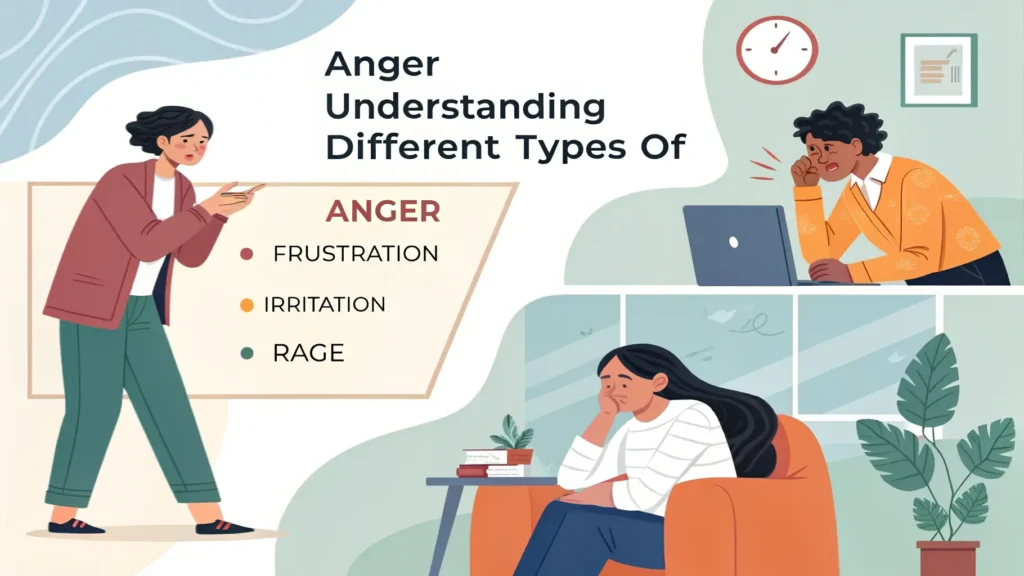
How to Release Anger: Understanding the Different Types We Carry
Anger has a bad reputation.
We are taught to suppress it, control it, spiritualise it away, or fear it. From a young age, many of us learn that anger is dangerous, unprofessional, unladylike, or negative. So we bury it under politeness, productivity, spirituality, or silence.
But anger is not the problem. Unconscious anger is.
When we ask how to release anger, we often assume anger itself is toxic. In truth, anger is one of the most intelligent signals within the human system. It tells us something is misaligned. Something has crossed a boundary. Something needs attention.
The issue is not that we feel anger. It is that we do not understand which kind of anger is present, or what it is asking for.
Not all anger is destructive. Not all anger needs suppression.
How to Release Anger: Understanding the Different Types We Carry
Anger has a bad reputation.
We are taught to suppress it, control it, spiritualise it away, or fear it. From a young age, many of us learn that anger is dangerous, unprofessional, unladylike, or negative. So we bury it under politeness, productivity, spirituality, or silence.
But anger is not the problem. Unconscious anger is.
When we ask how to release anger, we often assume anger itself is toxic. In truth, anger is one of the most intelligent signals within the human system. It tells us something is misaligned. Something has crossed a boundary. Something needs attention.
The issue is not that we feel anger. It is that we do not understand which kind of anger is present, or what it is asking for.
Not all anger is destructive. Not all anger needs suppression.
How to Release Anger by Understanding It as Energy
Before we label anger as good or bad, it helps to see it as energy.
Anger is movement. It is a force. It is the body’s response to violation, injustice, deception, or prolonged suppression. When anger is conscious, it becomes clarity. When anger is unconscious, it becomes chaos.
Over years of working with individuals in therapeutic and healing spaces, one thing becomes clear: most people are not “angry people.” They are people carrying unprocessed anger that has nowhere to move.
Releasing anger does not begin with expression. It begins with discernment.
White Anger: The Anger That Creates Change
White anger does not feel explosive. It feels sharp, purposeful, and clear.
This is the anger that says, “This is no longer acceptable.” It fuels ethical leadership, courageous conversations, and structural change. White anger is not reactive. It is responsive.
When people suppress white anger in the name of positivity or spirituality, it turns inward. Over time, that suppression can look like burnout, self-doubt, or quiet resentment.
Learning how to release anger in this form means giving it direction. White anger needs action with integrity.
Red Anger: The Anger That Signals a Lie
Red anger arises when there is distortion present. A truth unspoken. A boundary crossed. A misalignment sensed before it is understood.
It may show up as irritation, frustration, sudden spikes of emotion, or unexplained resentment. Often it is labelled as overreaction, especially when you cannot logically explain it.
But red anger is perceptive.
It is the body reacting to incongruence.
In therapeutic settings such as Family Constellation Therapy, we often see how red anger is connected to systemic patterns, inherited loyalties, or truths that were never acknowledged. When the hidden dynamics are brought into awareness, anger softens because clarity replaces confusion.
Red anger is asking one question: What truth is not being spoken?
Black Anger: The Shadow That Needs Healing
Black anger is the form people fear most.
It can feel destructive, jealous, obsessive, or dominating. It does not want resolution; it wants control. This type of anger often arises when pain has been denied for too long.
Humiliation, betrayal, helplessness, or chronic suppression can distort anger into something darker. Instead of moving outward constructively, it implodes or lashes out.
It is important to understand that black anger is not evil. It is wounded energy cut off from awareness.
Releasing anger at this level requires containment, support, and often body-based regulation. Approaches such as Access Bars Therapy help quiet mental aggression and release stored emotional charge from the nervous system, allowing intensity to settle without suppression.
Black anger dissolves when it is met with consciousness rather than fear.
Grey Anger: The Anger That Distracts You
Grey anger is subtle.
It does not explode. It erodes. It shows up as chronic irritation, cynicism, constant complaining, or emotional flatness. Many people mistake grey anger for personality.
But it is not my identity. It is avoidance.
Grey anger keeps you busy with surface-level dissatisfaction so you do not access deeper grief, vulnerability, or truth. Nothing changes because the real issue remains untouched.
When exploring how to release anger in this form, awareness becomes the first step. Grey anger needs presence, not reaction.
How to Release Anger Without Suppressing It
When anger has no outlet, it does not disappear. It settles into the body.
Suppressed anger is frequently associated with jaw tension, migraines, digestive discomfort, chronic fatigue, and emotional shutdown. Many high-functioning individuals insist they are “not angry,” yet feel persistently tired, resentful, or disconnected.
Healing anger is not about explosive expression. It is about listening without letting anger take control. At The Healing Room, we often see that anger begins to soften not when it is suppressed, but when it is understood — when the nervous system feels safe enough to process what has been held for too long.
White anger needs direction.
Red anger needs truth.
Black anger needs healing.
Grey anger needs awareness.
Through body-based processes, systemic work, and emotional integration sessions at The Healing Room, anger is allowed to move consciously rather than erupt unconsciously. When anger is given space and guidance, it completes its cycle.
And when anger is allowed to complete its cycle safely, it transforms.
Into boundaries.
Into clarity.
Into self-respect.
How to Release Anger and Work With It Consciously
The goal is not to eliminate anger.
The goal is to understand which anger is present and what it is asking for.
Body-based processes, somatic awareness, systemic work, and emotional integration create space for anger to move without harming oneself or others. When the nervous system feels safe, anger no longer needs to shout.
It becomes information.
Anger is not your enemy. It is a messenger. A signal that life within you wants alignment.
The question is not, “Why am I angry?”
The real question is, “Which anger is speaking-and am I willing to listen?”
When you stop fearing anger and start understanding it, the energy that once consumed you begins to serve you.
That is not a weakness.
That is emotional intelligence.
Frequently Asked Question (FAQs)
The healthiest way to release anger is by understanding its cause, expressing it safely, and processing it through emotional awareness and nervous system regulation.
Yes. Suppressed anger can lead to physical tension, fatigue, digestive issues, anxiety, and emotional shutdown over time.
Different types of anger feel different. Some feel sharp and purposeful, others feel reactive, destructive, or subtly resentful. Awareness helps identify the root.
Yes. Healthy anger can create boundaries, clarity, self-respect, and positive change when expressed consciously.
Unacknowledged emotional pain, suppressed truth, or subconscious stress patterns can trigger anger even when the surface situation seems minor.
Chronic anger can manifest as jaw tension, headaches, digestive discomfort, sleep problems, fatigue, and nervous system dysregulation.
Yes. Therapy helps uncover emotional roots, regulate the nervous system, and process anger safely without harming relationships.
Often, yes. Unprocessed trauma can distort anger into reactive or destructive patterns.
It varies. Some relief can happen quickly with awareness, while deeper patterns may require consistent therapeutic work.
No. Anger is a natural emotional signal. It becomes harmful only when ignored, suppressed, or expressed unconsciously.