
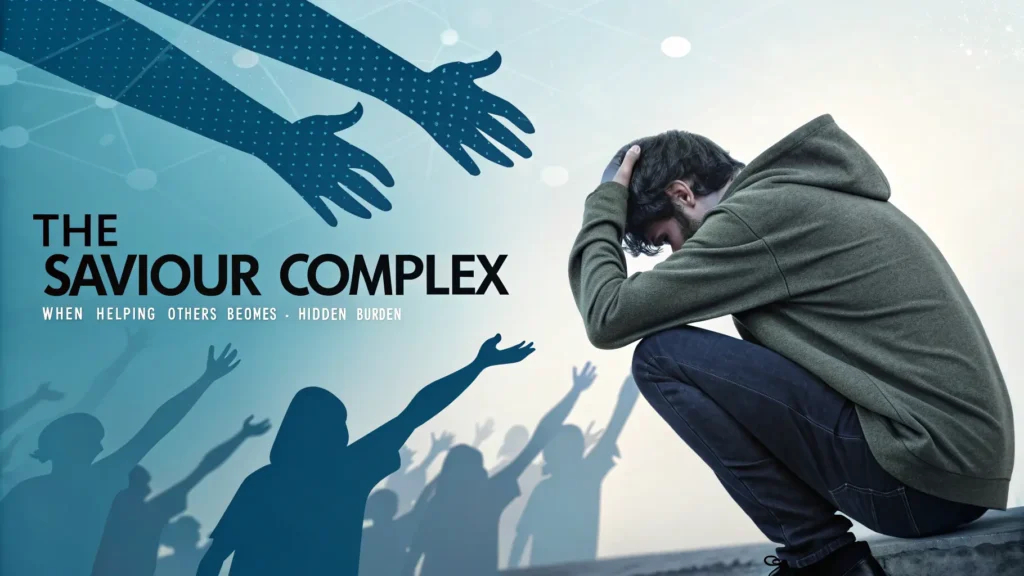
The Saviour Complex: When Helping Others Becomes a Hidden Burden
Helping others is one of the most admired human qualities. We appreciate the colleague who steps in when no one else does, the leader who stands up for the team, and the friend who is always emotionally available. These individuals are often seen as compassionate, strong, and dependable. From the outside, their behaviour looks admirable, even heroic.
But there is a quieter side to helping that rarely gets discussed. What happens when helping stops feeling like a choice and starts feeling like an obligation? When you feel responsible not only for tasks, but for other people’s emotions, reactions, and outcomes? Over time, that constant giving can transform into something heavier.
Instead of feeling fulfilled, you begin to feel drained. Instead of feeling generous, you feel pressured. Your body feels tired, your mind feels overloaded, and yet you keep stepping in, fixing, rescuing, managing. This is often where the saviour complex quietly takes root.
What Is the Saviour Complex
The saviour complex is a psychological and emotional pattern in which a person feels compelled to rescue, fix, or protect others. It goes beyond healthy support and enters the territory of over-responsibility. Helping is no longer an act of choice but a role the person feels they must continuously perform. Their sense of worth may gradually become tied to being needed.
On the surface, it may look like empathy, leadership, or generosity. Internally, however, it is often driven by anxiety, guilt, fear, or unresolved emotional experiences. The person may struggle to step back even when they feel exhausted. Helping becomes intertwined with identity.
Is Saviour Complex Bad
A saviour complex can lead to emotional exhaustion, resentment, burnout, and strained relationships. In many cases, this prolonged depletion mirrors patterns seen in burnout in women, where functioning continues but emotional energy steadily declines. The individual may feel unappreciated despite giving constantly. Over time, even genuine care can start to feel like a burden.
When Helping Turns Into Emotional Exhaustion
In a recent session, a corporate leader described persistent emotional exhaustion and frustration. He felt deeply responsible for his team’s emotional wellbeing and believed he had to constantly advocate, protect, and intervene. While his intentions were sincere, the effort was leaving him depleted. This kind of hidden exhaustion is common among high-functioning professionals and strongly resembles what we observe in burnout in women, where emotional fatigue accumulates beneath outward performance.
What began as support had gradually transformed into emotional combat. Every challenge felt like a battle to be fought. His nervous system remained in a constant state of alertness, scanning for problems to fix and conflicts to resolve. These patterns are increasingly visible in high-pressure workplaces, which is why many organizations now invest in corporate wellness programs to address stress, emotional regulation, and burnout prevention.
What Causes Saviour Complex
Many people wonder where this pattern originates. Psychologically, it often develops in childhood environments where a person learned to equate worth with being helpful. Children who became emotional caretakers, mediators, or stabilisers frequently carry this role into adult life.
Unresolved trauma, guilt, grief, or experiences of helplessness can further reinforce the need to rescue others. In some therapeutic frameworks, this may also be explored through ancestral or systemic influences. Regardless of the lens, the result is similar: a persistent internal pressure to save.
Do I Have a Saviour Complex
Self-awareness is a powerful starting point. If you often feel responsible for other people’s emotions, struggle to say no, or feel drained after helping, it may indicate a saviour pattern. The key distinction lies in how helping feels within your body and mind.
Healthy support feels voluntary and energising. A saviour complex feels obligatory and exhausting. The behaviour may look similar, but the internal experience is very different.
How to Stop Saviour Complex Patterns
Healing the saviour complex is not about becoming indifferent or detached. It is about restoring choice, boundaries, and self-responsibility. This involves recognising where helping has turned into overextension.
It requires learning to tolerate discomfort when you do not step in. It involves trusting that others can carry their own journeys. Most importantly, it involves separating self-worth from rescuing behaviour.
Final Thoughts
Healing the saviour complex does not make you selfish. It makes your compassion sustainable. Whether approached individually through therapy or systemically through interventions like corporate wellness programs, this shift restores balance, clarity, and long-term wellbeing
It requires learning to tolerate discomfort when you do not step in. It involves trusting that others can carry their own journeys. Most importantly, it involves separating self-worth from rescuing behaviour.
Frequently Asked Question (FAQs)
The saviour complex is a psychological pattern where a person feels compelled to rescue, fix, or protect others, often at the expense of their own emotional wellbeing.
Helping others is healthy, but when helping becomes compulsive and leads to emotional exhaustion, burnout, or resentment, it can become harmful.
It may develop from childhood conditioning, trauma, guilt, over-responsibility, or a deep need to feel valued through helping others.
They often evolve gradually as helping behaviour becomes tied to identity, self-worth, or a fear of letting others struggle.
Constantly feeling responsible for others, difficulty saying no, emotional fatigue, and resentment after helping are common indicators.
Helping can be positive when it is conscious, balanced, and does not involve self-sacrifice or emotional depletion.
Emotionally, it often reflects a need to feel needed, fear of rejection, unresolved guilt, or difficulty setting boundaries.
Recovery involves self-awareness, boundary-setting, emotional regulation, and learning to help without over-identifying with rescuing roles.
Saviour syndrome refers to a repeated tendency to seek out situations or relationships where one feels obligated to rescue or fix others.
Yes. Approaches like Family Constellation Therapy, Inner Child Healing, and psychological counselling can help uncover and heal underlying patterns.